
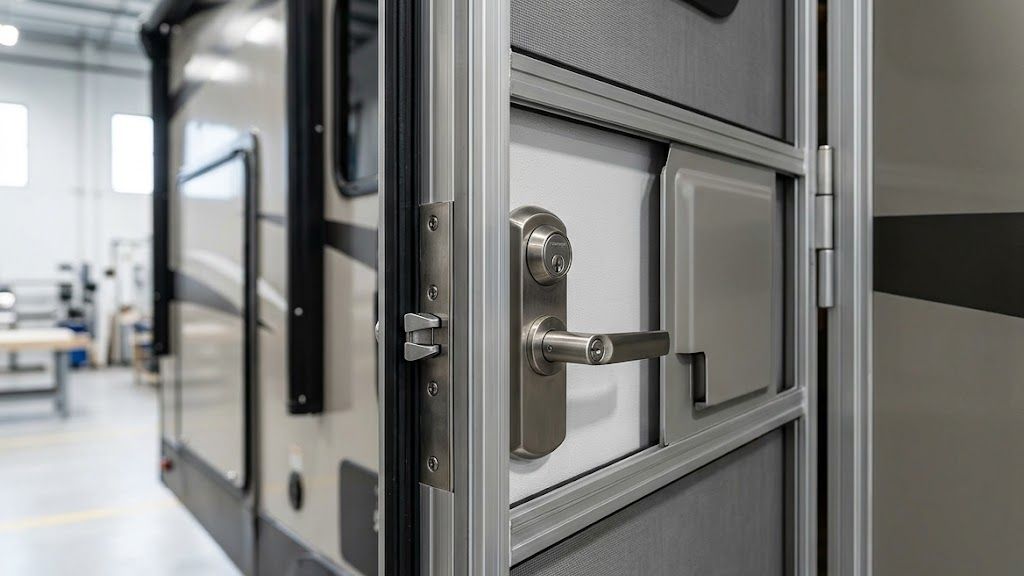
Custom RV and trailer doors Waycross, GA must meet DOT safety standards to protect occupants and other road users. This article summarizes key DOT requirements, material choices that affect durability and compliance, installation and maintenance best practices, and how commercial hauler standards influence door design.
What Are the Key DOT Trailer Door Requirements for Custom Doors in Waycross, GA?
The Department of Transportation (DOT) requires trailer doors to satisfy standards for structural integrity, approved materials, and reliable operation to reduce safety incidents and penalties.
Which Federal and State Regulations Govern Trailer Door Compliance?
Federal rules, including NHTSA standards, set baseline safety requirements, while industry guidance such as ANSI informs design and construction; state regulations may add further obligations manufacturers must follow.
How Does SDG Ensure Custom Doors Meet DOT Safety Standards?
SDG Doors and Windows applies quality-assurance protocols, selects proven materials, and performs testing and documented certification so each custom trailer and RV door meets relevant DOT and industry expectations.
How Do Custom Trailer Door Materials Affect Durability and Safety Compliance?
Material selection directly influences a door’s strength, corrosion resistance, insulation, and its ability to meet DOT requirements under highway conditions.
What Are the Best Materials for RV and Trailer Doors to Meet Safety Standards?
Certain materials offer the best balance of safety and longevity; common choices include:
- Aluminum: Lightweight, corrosion-resistant, and structurally sound.
- Fiberglass: Good insulation and weather resistance for energy efficiency.
- Composite Core Doors: Layered constructions that improve impact resistance and durability.
These options support DOT expectations and long service life when specified and installed correctly.
How Does Material Choice Impact Long-Term Door Performance and Compliance?
Higher-quality materials and precise fabrication preserve structural integrity, reduce failure risk, and help sustain compliance; proper sealing and fit prevent water ingress and protect insulation.
What Are the Best Practices for Installation and Maintenance of DOT Compliant Trailer Doors?
Correct installation and scheduled maintenance are essential to sustain DOT compliance and reliable door operation.
How to Properly Install Custom Trailer Doors to Maintain DOT Compliance?
To install custom trailer doors correctly, follow these core steps:
- Preparation: Verify the door frame is level and clear of debris.
- Sealing Techniques: Fit high-quality weather seals to prevent water intrusion and preserve insulation.
- Final Adjustments: Adjust alignment and test operation so the door opens, closes, and locks smoothly.
These steps help preserve regulatory compliance and safe trailer operation.
Additional guidance on rear-door regulations and installation practices underscores the complexity of achieving full compliance and operational safety.
Trailer Rear Door Regulations & Installation
Discussion of ground access via rear doors, loading-dock installation practices, and enforcement of regulations for heavy trailer-truck operations. Truck Falls Examining the Nature of the Problem, 2008
What Maintenance Steps Ensure Ongoing Safety and Regulatory Adherence?
Routine maintenance keeps doors compliant and serviceable; key actions include:
- Routine Inspections: Check regularly for wear, damage, and alignment issues.
- Lubrication Practices: Lubricate hinges and moving parts to maintain smooth operation.
- Seal Maintenance: Inspect and replace seals to prevent water intrusion and preserve insulation.
Consistent application of these practices extends service life and reduces compliance risks.
How Do Commercial Hauler Safety Standards Influence Custom Trailer Door Design in Waycross, GA?
Commercial hauler standards focus on door performance under heavy loads and frequent use, guiding choices in strength, locking hardware, and insulation to protect cargo and personnel.
What Specific Commercial Hauler Regulations Affect Trailer Door Specifications?
Regulations commonly specify door strength, reliable locking systems, and insulation requirements; manufacturers must integrate these into designs to meet operational demands.
The specific demands on commercial vehicle doors—design, material selection, and government requirements—underscore the need for specialized manufacturing.
Commercial Vehicle Door Design, Materials & Government Requirements
ABSTRACT: Design of body structures for commercial vehicles differs significantly from automotive due to government, design and usage requirements. Specifically, heavy truck doors are not required to meet side impact requirements due to their height off the ground as compared to automobiles. However, heavy truck doors are subjected to higher loads, longer life, and cannot experience permanent deformation from overload events.Aluminum has been used intensively in commercial vehicle doors and cab structures for over 50 years by several different manufacturers in North America.
Innovative door design for commercial vehicles, 2014
How Does Compliance Enhance Highway Safety for Commercial Haulers?
Compliance improves highway safety by ensuring doors perform reliably under load, reducing accidents caused by door failures and protecting both haulers and other road users.
Frequently Asked Questions
What are the consequences of non-compliance with DOT standards for trailer doors?
Non-compliance can result in fines, legal liability, product recalls, and safety hazards that harm users and a manufacturer’s reputation.
How often should trailer doors be inspected for compliance?
Inspect at least every six months, or more often under heavy use or severe conditions; check for wear, damage, and correct operation and perform timely repairs.
What role do locking mechanisms play in trailer door safety?
Locking mechanisms secure doors during transport and prevent unauthorized access; choose locks rated for strength and durability to meet DOT expectations.
Can custom trailer doors be retrofitted to meet DOT standards?
Many doors can be retrofitted—by upgrading materials, reinforcing structure, or improving locking hardware—but consult a qualified manufacturer or engineer to verify compliance.
What are the best practices for sealing custom trailer doors?
Use high-quality weather seals matched to the door and environment, install them correctly, inspect regularly, and replace when worn to preserve insulation and prevent leaks.
How do environmental factors affect the performance of trailer doors?
Temperature changes, humidity, and UV exposure affect fit, corrosion risk, and material longevity; selecting resistant materials and finishes helps maintain durability and compliance.
Conclusion
Complying with DOT safety standards for custom RV and trailer doors protects users and other road occupants; choosing proven materials and following installation and maintenance best practices enhances durability and regulatory adherence. Contact us for more information on our custom trailer and RV door solutions.