
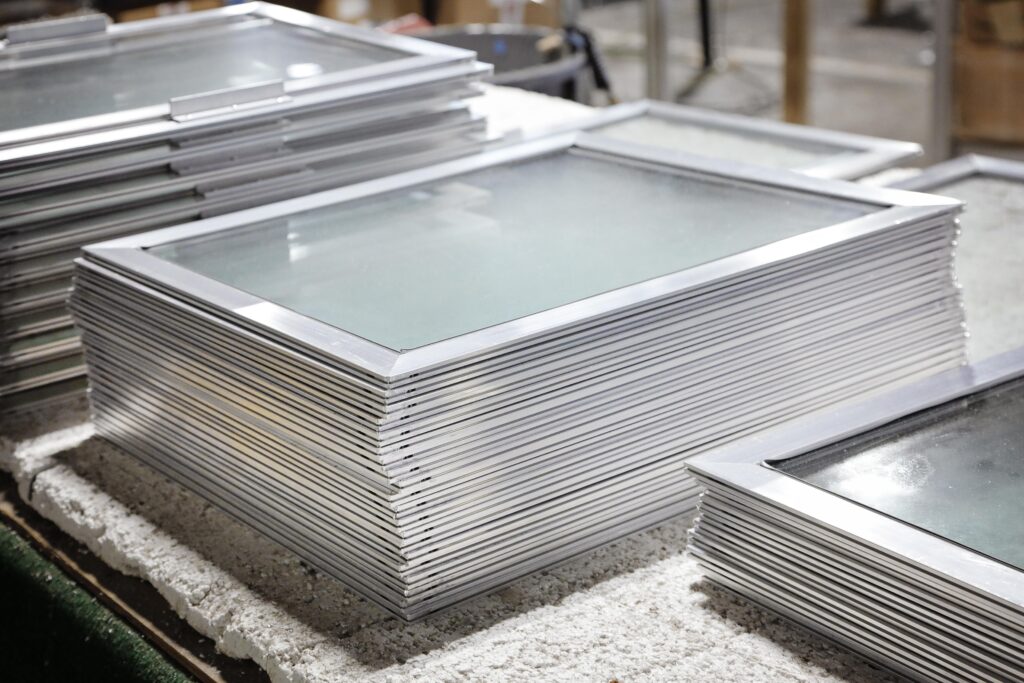
Food trailer windows are the concession windows, glass, and screens that turn a blank trailer wall into a working service counter. The right ones open smoothly, seal tight against weather and pests, use safety glass at the pass-through, and match the exact rough opening of your build. Choose them well and they protect your food, your crew, and your inspection score. Choose them badly and you fight leaks, fogged glass, and failed checks for the life of the trailer.
This guide walks through how to size a concession window, which glass to spec, what screens the health code expects, and when a custom build beats an off-the-shelf part.
Key Takeaways
- Measure the rough opening first. A concession window is built to the hole, not the other way around, so custom sizing beats forcing a stock part.
- Spec safety glass at the pass-through. Fully tempered glass runs four to five times stronger than ordinary annealed glass and breaks into small, blunt pieces.
- Plan for pests. When a window is open for service, the FDA Food Code expects 16 mesh to 1 inch screens, air curtains, or another effective barrier.
- Double-pane glass helps hold galley temperature and cuts fogging on hot, humid service days.
- Order from a maker that cuts to fit and ships nationwide, so the window, screen, and hardware all match one opening.
Food trailer windows are a business decision, not an afterthought
The mobile food sector keeps growing, which is exactly why the serving window matters. There are 88,353 food truck businesses in the United States as of 2026, up 11.3 percent from 2025, and the count has grown 12.5 percent per year on average since 2021, according to IBISWorld. Trailers ride the same wave of demand. More competition at the curb means your service window is doing real sales work every shift.
Think of the concession window as the storefront. It frames the food, sets the first impression, and controls how fast a line moves. A window that sticks, fogs, or rattles slows service and reads as sloppy. A clean, well-sealed opening with clear glass does the opposite. That is why the custom windows you pick deserve the same attention as the griddle or the wrap.
What counts as a food trailer window
A food trailer window is any glazed opening in the build, but two types do most of the work. The first is the concession or service window: the large pass-through, usually top-hinged or vertical-lift, where you hand out orders. The second is the fixed or sliding side window that lights the galley and gives the cook a view. Many builds also carry an RV-style window near the prep area for cross ventilation.
Concession windows differ from house windows in a few ways. They live on a vehicle that flexes and vibrates down the highway. They open outward to double as a serving shelf or awning. And they take heavy, repeated use during a rush. SDG Doors & Windows builds these for RVs, trailers, concession trailers, and food trailers, and pairs them with matching concession glass and screens so the whole opening works as one unit rather than a mix of parts that never quite line up.
How to size and spec a concession window
Start with the rough opening, not the catalog. Measure the width and height of the framed hole in the wall, confirm it is square, and note the wall thickness so the frame flange seats correctly. From there you decide the opening style, the glass, the screen, and the hardware. A window built to that measurement seals better and installs faster than a stock part you shim to fit.
Use this quick checklist when you spec a window:
| Decision | What to confirm |
|---|---|
| Rough opening | Exact width and height, checked for square |
| Wall thickness | So the frame and trim seat flush |
| Opening style | Top-hinge awning, vertical lift, or slider |
| Glass | Single or double pane, clear or tinted, tempered |
| Screen | Standard or heavy-duty, custom-fit to the frame |
| Hardware | Gas stays, latches, and locks rated for road use |
Because SDG cuts each piece to fit, you are not rounding your opening to the nearest stock size. That matters most on custom builds where two trailers rarely share the same wall layout. If your design also needs an access or cargo opening nearby, plan the RV and trailer doors at the same time so the panels, hinges, and finishes match.
Glass and safety: why tempered and insulated matter
Spec safety glass at any opening people reach through, and treat the service window as exactly that kind of hazardous spot. Fully tempered glass is four to five times stronger than annealed glass and must reach at least 10,000 pounds per square inch of surface compression under ASTM C1048, and when it does fail it fractures into relatively small pieces instead of long shards, per Vitro Architectural Glass. That break pattern is the whole point of safety glazing near a busy counter.
The benchmark comes from federal safety rules. The U.S. Consumer Product Safety Commission enforces 16 CFR Part 1201, a mandatory federal Safety Standard for Architectural Glazing Materials that has governed glazing in doors and other hazardous locations since 1977, as the CPSC confirms. A concession window is functionally a large door people lean through, so the same logic applies: use glazing that will not turn into a knife if a tray or a shoulder hits it.
Spec check
The three numbers a service window has to clear
Glazing strength and screen mesh are the two places a concession window is judged — by the glass standard and by the inspector.
4–5×
strength of fully tempered glass versus ordinary annealed glass
10,000 psi
minimum surface compression fully tempered glass must reach under ASTM C1048
16 mesh
per inch — the FDA Food Code screen baseline for an outer opening kept open for service
Then pick single or double pane based on climate and use:
| Glass build | Best for | Trade-off |
|---|---|---|
| Single pane, tempered | Light builds, mild climates, lower cost | Less insulation, more fogging risk |
| Double pane, insulated | Hot or cold routes, long service days | Adds weight and cost |
| Tinted | Privacy, glare, and UV control | Slightly less interior light |
SDG offers tempered and insulated glass along with tinted, frosted, and clear options, all custom cut to the frame. If you ever need to replace a cracked pane or add a matching screen later, sourcing it from the original maker keeps the fit exact.
Screens and pest control: clearing the health-code bar
Screens are not optional once a window opens for service. Under the FDA Food Code (section 6-202.15, Outer Openings, Protected), any outer opening kept open for ventilation or service must be protected against insects and rodents by 16 mesh to 1 inch screens, properly designed air curtains, or other effective means, a rule reproduced in the FDA Food Code that states adopt for retail food establishments. An inspector who sees an open, unscreened serving window has an easy write-up.
Match the screen to the work. A light standard screen suits low-traffic prep windows, while a heavy-duty, tear-resistant mesh holds up at a busy concession pass-through that opens and closes all day. SDG builds standard and high-durability screens custom-fit to each frame, so the mesh sits tight with no gaps at the corners. Keep spare mesh and the small hardware on hand through a parts and accessories order, because a torn screen at a weekend event should be a five-minute fix, not a lost day.
Ventilation, comfort, and life on the road
Good windows do quiet work all day: they vent heat, hold temperature, and shrug off vibration. Double-pane insulated glass helps a galley stay closer to a workable temperature when the flat-top is running and the sun is high, and it cuts the condensation that fogs a single pane on a humid morning. That keeps the food visible and the cook comfortable.
Durability is the other half. A trailer window takes road vibration, curb bumps, and hundreds of open-and-close cycles a week, so the hardware has to be rated for it. Gas stays that hold the awning steady, latches that lock down for transit, and frames that resist moisture all extend the service life of the opening. SDG builds with materials chosen to withstand diverse environments and everyday wear, and every piece goes through quality checks before it ships.
Custom vs off-the-shelf: buying from a manufacturer
Buy custom when your opening is not a standard size, which on a purpose-built food trailer is most of the time. An off-the-shelf window forces the build to fit the part. A custom window does the reverse, matching the glass, screen, and hardware to one measured opening so everything seals as a set.
Working with a manufacturer that makes the parts in house has a second payoff: one source for the whole opening and any future replacement. SDG Doors & Windows manufactures its own products, cuts each piece to fit, and ships nationwide, which keeps the window, the glass and screens, and the trim consistent across a fleet. Browse the full range on the products page before you finalize a build so the openings are specified before the walls are closed up.
Frequently Asked Questions
What size are food trailer serving windows?
There is no single size. The window is built to the rough opening in your wall, so the first step is to measure the framed hole for width, height, and square, then have the window made to fit. Custom sizing avoids the gaps and shims that come from forcing a stock part.
Do concession windows need tempered glass?
Treat the service window as a hazardous location and use safety glazing there. Fully tempered glass is far stronger than annealed glass and breaks into small, blunt pieces, which is the behavior the federal 16 CFR Part 1201 standard is built around for doors and similar openings.
What screen do I need to pass a health inspection?
When a window is open for service, the FDA Food Code expects protection against insects and rodents, and the baseline it names is 16 mesh to 1 inch screening, air curtains, or another effective barrier. A tight, custom-fit screen with no corner gaps is the simplest way to meet it.
Can I get windows for both an RV galley and a concession trailer from one maker?
Yes. SDG builds RV windows, trailer windows, and concession windows, plus the doors, glass, and screens that go with them, so a mixed build can source every opening from one place.
How are custom windows delivered?
SDG manufactures its products in house and ships nationwide, and each piece is custom cut to the frame you specify. Confirm your measurements and glass choice up front so the finished unit drops straight into the opening.
About SDG Doors & Windows
SDG Doors & Windows manufactures custom doors, windows, glass, and screens for RVs, trailers, concession trailers, and food trailers, built to order and shipped nationwide from Waycross, Georgia. Have a question about your build? See the frequently asked questions.